The Complete Guide to Halal Mortgage Options in the USA: How to Buy a Home Without Riba
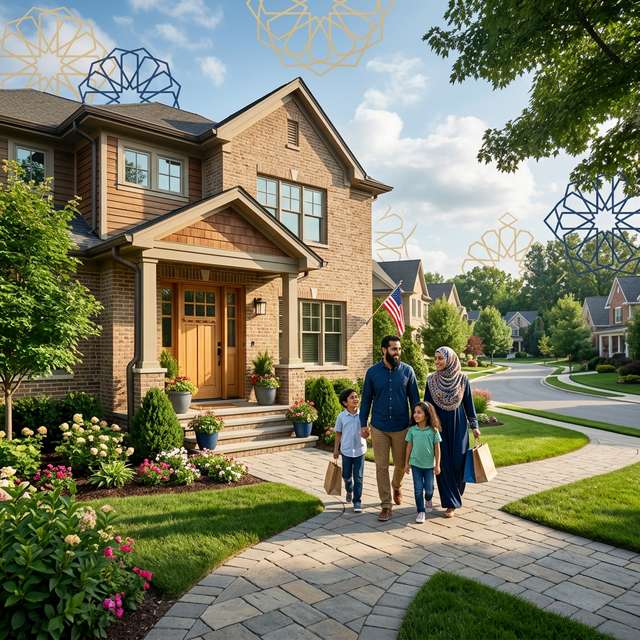
Halal Mortgage USA Cover Image
For many Muslim homebuyers in the USA, the dream of homeownership often clashes with the deeply held religious principle of avoiding Riba (usury or interest). Traditional conventional mortgages are fundamentally based on lending money at an interest rate, which is strictly prohibited in Islamic finance.
However, the landscape of homeownership for the Muslim community in the United States has evolved significantly. Today, there are several established, structured pathways to achieve the American dream while remaining true to your faith. This comprehensive guide explores what a Halal mortgage is, how Islamic home financing works in the USA, and the different Sharia-compliant models available to prospective buyers.
What is a Halal Mortgage?
A "Halal mortgage"—more accurately termed Islamic home financing or a Riba-free home loan—is a financial arrangement designed to allow Muslims to purchase property without paying or receiving interest.
Instead of a bank lending you money and charging interest on the principal amount, Islamic financial institutions use alternative structures based on trade, partnership, or leasing. These models ensure that the financial institution assumes a share of the risk and earns a legitimate profit through a tangible asset transaction, rather than simply making money from money.
Because these financial products must comply with both US banking regulations and Islamic law (Sharia), they are carefully structured and overseen by independent Sharia supervisory boards.
Why Choose Sharia-Compliant Home Financing?
The primary motivation for choosing a Sharia-compliant home financing option is religious adherence. However, these models also offer structural benefits that appeal to a broader audience:
- Risk Sharing: Unlike traditional mortgages where the borrower bears almost all the risk, Islamic finance models often distribute the risk more equitably between the financier and the homebuyer.
- Asset-Backed: Transactions must be backed by a tangible asset (the property). This restriction prevents speculative financing and promotes greater economic stability.
- Transparency: Islamic finance contracts strictly prohibit Gharar (excessive uncertainty or deception). All terms, costs, and profit margins must be clearly outlined and transparent from day one.
The 3 Main Types of Islamic Home Financing in the USA
If you are looking for a Riba-free home loan in the United States, you will generally encounter three primary financing models. Understanding how each model works is crucial to choosing the right path for your family.
1. Murabaha (Cost-Plus Financing)
The Murabaha model is essentially a deferred payment sale. It is one of the most common and straightforward Islamic financing methods. For a detailed side-by-side comparison of Murabaha with Ijara, see our guide: Murabaha vs. Ijara: Which Islamic Mortgage is Right for You?
How it works:
- You identify the house you want to buy.
- The Islamic financier purchases the property directly from the seller at the agreed-upon price.
- The financier then immediately sells the property to you at a higher price (Cost + Profit).
- You pay the financier this new, fixed price in monthly installments over a set period (e.g., 15 or 30 years).
Key Takeaway: The profit the financier makes is a fixed markup on a trade transaction, not interest accrued over time. Because the final price is fixed from the beginning, your monthly payments will never fluctuate.
2. Ijara (Lease-to-Own)
The Ijara model operates similarly to a rent-to-own or lease-purchase agreement. The focus here is on the utility of the property rather than an immediate transfer of full ownership.
How it works:
- The financier creates a trust that purchases the property.
- The trust leases the property to you for a specified term.
- Your monthly payment is split into two parts: a "rent" portion for living in the house, and an "acquisition" portion that gradually buys out the financier's ownership share.
- Once you have acquired 100% of the shares (or reached the end of the term), the title is fully transferred to your name.
Key Takeaway: Your payments slowly build your equity in the home. The rent portion is periodically adjusted based on current market conditions, meaning your total monthly payment can change over time.
3. Musharaka (Declining Balance Partnership)
Musharaka, specifically Diminishing Musharaka, is a co-ownership model. Many scholars consider this to be the most authentic form of Islamic finance as it represents a true partnership.
How it works:
- You and the financier form a partnership to purchase the property together. Your down payment represents your initial equity share, while the financier contributes the rest.
- Since you are living in the home—which is partly owned by the financier—you pay a monthly utility fee (essentially rent) for their share of the property.
- You also make additional monthly payments to buy out the financier's equity shares.
- As you buy more shares, the financier's ownership decreases, which means the "rent" you pay also decreases. Once you own 100% of the shares, the partnership ends.
Key Takeaway: This is a pure equity-building model where the financier and the buyer share the risks of homeownership proportionally.
Are Islamic Mortgages More Expensive?
A common question among Muslim homebuyers is whether Sharia-compliant financing is more expensive than a conventional interest-based loan.
Historically, Islamic home financing carried a slight premium due to the complexities of structuring the contracts, higher administrative costs, and the smaller scale of Islamic financial institutions compared to major national banks.
However, as the demand for Riba-free home loans has grown in the USA, increased competition has driven costs down. Today, the profit rates and monthly payments for Halal mortgage alternatives are generally highly competitive and comparable to conventional mortgage rates. When evaluating providers, it is essential to compare the total cost of financing, including closing costs and administrative fees, just as you would with any major financial decision.
To understand exactly how Islamic financiers set their profit rates—and why they often mirror national benchmarks—read our dedicated explainer: How National Benchmark Rates Affect Your Halal Profit Rates.
How to Apply for a Halal Mortgage in the USA
The process of securing an Islamic home financing plan is remarkably similar to traditional home buying, ensuring a smooth process with real estate agents and sellers. If you are buying in Michigan—one of the most accessible states for Halal home financing—be sure to read our step-by-step guide for Michigan buyers.
- Prequalification: Before house hunting, get prequalified with a reputable Islamic finance provider. They will evaluate your credit score, income, and debt-to-income ratio.
- Down Payment: Be prepared with a down payment. Most Islamic financiers require a minimum of 5% to 20% down, depending on the specific program and structure.
- Property Selection: Find a home that fits your budget. Note that some financiers may have restrictions against purchasing properties intended for non-compliant commercial activities.
- Closing: The closing process involves specialized contracts that reflect the Murabaha, Ijara, or Musharaka structure, ensuring full compliance with both state real estate laws and Sharia principles.
Making a Confident, Faith-Based Decision
Achieving homeownership does not require compromising your values. With the rise of robust, Sharia-compliant financing options across the USA, Muslim families can confidently invest in real estate and build long-term wealth Riba-free.
Take the time to research providers, ask detailed questions about their Sharia board certifications, and utilize calculators to understand your estimated monthly payments before making a commitment.
Further Reading
Ready to go deeper? Explore these related guides from our Islamic Finance resource hub:
Islamic Finance Concepts
- Murabaha vs. Ijara: Which Islamic Mortgage is Right for You? — A detailed breakdown of the two most popular Sharia-compliant financing models.
- How National Benchmark Rates Affect Your Halal Profit Rates — Why Islamic profit rates mirror conventional benchmarks and how to use that knowledge to time your purchase.
Buying in Michigan
- Can You Buy a House in Michigan Without Riba? A Complete Guide — A step-by-step guide for buyers in Wayne County, Dearborn, and Metro Detroit.
Rates & Tools
- Halal Home Financing Rates Guide 2026 — Strategies for navigating rate environments as a Halal homebuyer.
- How to Use a Halal Home Financing Calculator — Master the calculator inputs specific to Islamic financing structures.
Disclaimer: This article is for informational and educational purposes only and does not constitute financial or legal advice. Please consult with a certified financial advisor or Islamic finance expert before making any real estate decisions.
Related Articles
Murabaha vs. Ijara: Which Islamic Mortgage is Right for You?
The two most popular Islamic home financing models available today are Murabaha and Ijara. Understand the mechanics, benefits, and differences between them.
How National Benchmark Rates Affect Your Halal Profit Rates
If this is truly a Halal mortgage, why is the cost tied to the national interest rate benchmark? Understand how Islamic financial institutions use these national benchmarks.
Can You Buy a House in Michigan Without Riba? A Complete Guide
Michigan is zeroing in as a hub for Halal mortgages. Here is your complete guide to navigating the Sharia-compliant housing market in Michigan without engaging in Riba.
Comments (0)
No comments yet. Be the first to share your thoughts!
Contact Us
To ensure absolute accuracy and provide you with documented, Sharia-compliant financing quotes that you can review in your own time, all our preliminary consultations are conducted via email. Fill out the quote form, and our matching team will email you the best options within 24 hours.
For direct inquiries, you can also reach us at: contact@uimortgage.com